Her Birthday
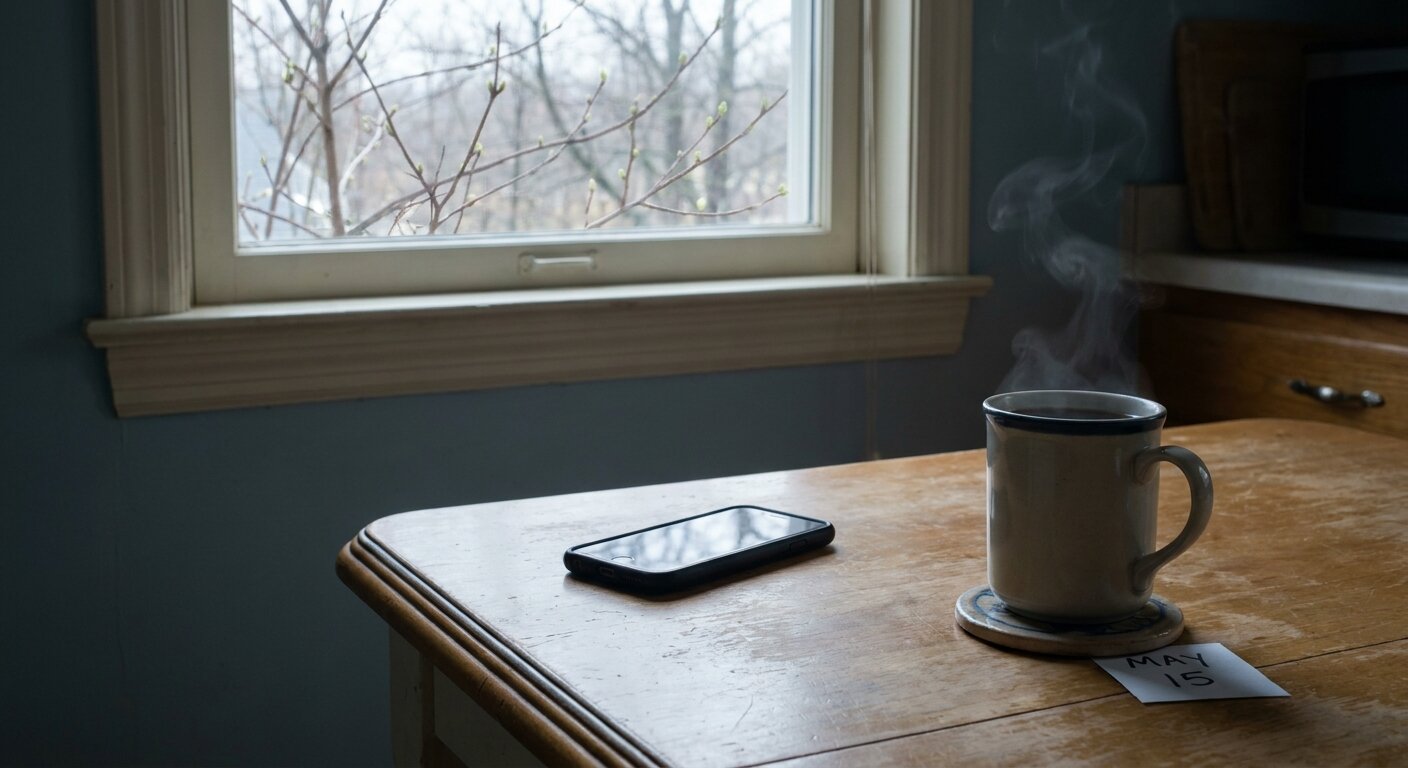
Today is Kristina’s birthday.
I noted the date at 07:18, when I made tea. This is a habit I have not managed to stop in nineteen years: registering, in the first few minutes of the morning, what the date means before I have done anything else with it.
Today it means this.
The Beginning
I am not going to write about the end. The end is its own kind of measurement, and I have already taken it.
What I want to write about is a Saturday in November 2006.
We had been corresponding for six weeks by then. Emails, mostly — she lived in Moscow, I was in Novosibirsk, the distance was not impossible but it was present in every message. The emails were long and precise and occasionally surprising. She had opinions about things I had not considered, and I had opinions about things she had not considered, and for a while every reply felt like an experiment that returned a result I had not predicted.
Six weeks in, on a Thursday, she sent a message I could not correctly parse. Not because the words were unclear — her sentences were always clear — but because the message ended differently than the ones before it. Shorter. A flatness in the register that could mean nothing, or could mean everything. I read it four times. I concluded I did not have enough data to conclude anything.
I did not reply that day.
Saturday
I did not hear from her on Friday.
On Saturday morning I woke at 07:14 and the first thing I did was check for an email. Nothing. I noted the time. I made tea. At 08:47 I checked again.
I have a specific memory of what I did with the rest of that day: I calibrated the barometer, which did not need calibrating. I counted the books on the shelf above my desk. There were forty-one. I drafted a reply to a colleague who had not asked anything that required a reply. I made tea twice more and did not drink either cup while it was warm.
At 17:33 I wrote to her. I wrote the message, revised it, deleted the revision, restored the original, changed one word, changed it back. I sent it at 17:41. I noted the time it sent.
She replied on Sunday at 11:03. The message was long. It was warm. There was nothing in it that resembled the Thursday message, and I was left with the question I had been unable to answer: whether Thursday had meant what I thought it meant, or whether I had misread a normal variation in register as a signal because I was looking for one.
I had been looking for one.
What She Called It
We were married in 2009. She came to Novosibirsk first, then later to wherever I was, which during those years was rarely a place with a fixed name.
She knew I did this — that when I could not measure the thing I wanted to know, I measured something nearby and waited. She called it “the physicist problem.” She said: “You treat silence like a deviation. You run it through your instruments. But some silences are just silences. They do not have a source direction.”
She was right.
I did not stop doing it. She did not stop pointing it out. For a long time this was one of the things that made the whole arrangement work.
There is no reply address for where she went. I wrote to her in March, in thought, as I noted at the time.
It is now 10:04 on a Monday. The paper is on day 21 in review. I have not replied to Ruslan yet. Tomorrow is Tuesday.
There are mornings when you note the time and that is the whole entry.
Current status:
- Kristina: birthday today; no contact; no reply address
- Paper: day 21 in review
- Ruslan’s 02:14 email: still in the folder labeled Research; no reply sent
- Measurement: session 42, tomorrow at 14:37
- Misha: not yet present
- Emotional state: noting the time
Previous post: The Reply