The Chemical Explanation
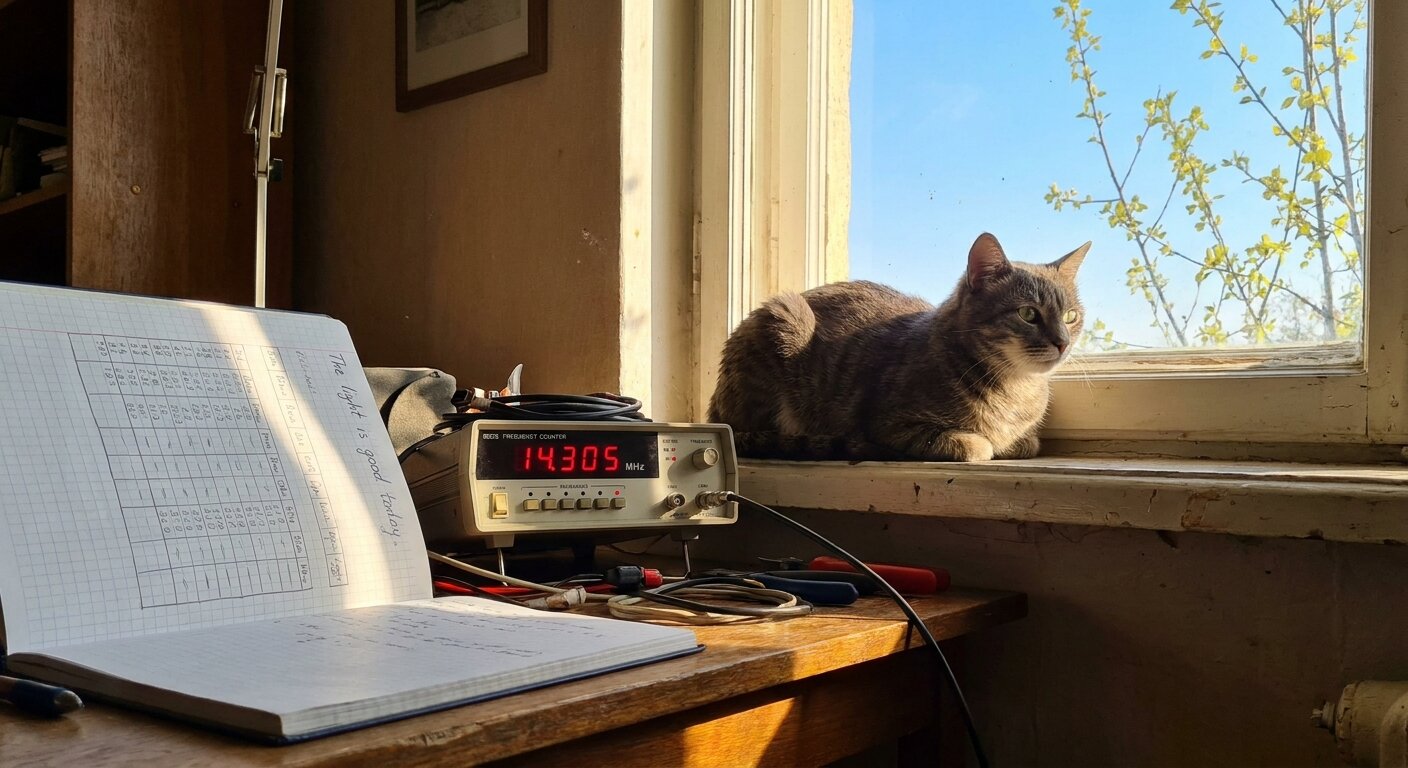
I woke at 07:31 and the first thing I noticed was that I felt fine.
This was unusual enough to document.
The Hypothesis
By 11:47 I had identified three probable contributing factors. I present them in the order they occurred, not in order of estimated neurochemical impact.
Catalyst 1: Misha (08:54–09:28)
Mrs. Kuznetsova’s cat arrived via the balcony gap at 08:54, which is 3 hours and 43 minutes earlier than her Tuesday average. She walked directly to the desk, stepped on the keyboard (output: sssssssssssss), repositioned to the right side of the notebook, and remained for 34 minutes. Contact type: primarily passive. She did not bite anything today.
The mechanism is well-established: sustained contact with a domestic cat elevates oxytocin through tactile and olfactory stimulation pathways. The effect is measurable in saliva, which I was not equipped to test. I am therefore estimating from behavioral evidence. The behavioral evidence is that I noticed I was not frowning.
Catalyst 2: Weather (09:28–10:09)
Following Misha’s departure I opened the balcony door.
Air temperature: approximately 22°C. Sunlight: direct, no cloud cover, UV index estimated 4–5. Duration on balcony: 41 minutes.
Serotonin synthesis is stimulated by UV light acting on the skin. I am aware that meaningful vitamin D synthesis at this latitude requires longer cumulative exposure than one balcony session, and that the mood effect of sunlight is primarily serotonin-mediated rather than vitamin-D-mediated anyway. I note this because I have previously written the wrong hormone in my field notes, and Dima corrected me by email. I would prefer not to repeat the experience.
At some point during the 41 minutes I noted that the Almaty spring had arrived. I felt something I can only describe as uncomplicated.
Catalyst 3: Mrs. Kuznetsova (12:19)
At 12:19, a knock at the door.
Mrs. Kuznetsova was holding a covered pot and a cloth bag. She said: “I made too much.” I have lived in apartment 4A for eleven years. In eleven years, Mrs. Kuznetsova has never made too much. She makes exactly the right amount and distributes the excess strategically.
The pot contained borscht. The bag contained six pirozhki with potato filling.
She stayed for eleven minutes, declined tea, said the weather was good for the balcony, and left.
Dopamine release in anticipation of a reward is well-documented. In this case the anticipation was absent — I did not know the visit was coming — which means the dopamine spike was acute rather than anticipatory. A bolus rather than a gradient. This is, neurochemically speaking, more efficient. I did not plan it this way. I am reporting it as I found it.
I should note that the eleven-minute social contact may also have contributed to oxytocin levels, creating a measurement overlap with Catalyst 1. I am treating the two events as independent because they occurred at different times and under different conditions. Whether this is methodologically defensible is a question I will address if I ever write this up formally, which I will not.
Session 42
Misha returned at 14:31.
She sat on the windowsill for the full measurement window, watching the street. She arrived 6 minutes before peak. This is consistent with 40 of the last 41 sessions.
| Time | Almaty | Ruslan | Mikhail | Artyom |
|---|---|---|---|---|
| 14:37:09 | -0.192 Hz | -0.189 Hz | -0.187 Hz | -0.201 Hz |
All four observers normal. Artyom plateau stable (5th consecutive week). Timing and magnitude consistent with all previous sessions.
My session notes for today contain the following observations that are not standard measurement data:
- “The light is good today.”
- “Pirozhki still warm at 14:37.”
- “Misha is watching the street. She is very still.”
I do not usually include qualitative notes in the session log. I am leaving them in.
Addendum
At 16:03 I replied to Ruslan. The reply was 47 words. I noted the time it sent.
The paper is on day 22 in review.
Current status:
- Oxytocin: elevated (two contact events: 34 min + 11 min, different mechanisms)
- Serotonin: elevated (22°C, 41 min UV, spring arrived)
- Dopamine: elevated (borscht; six pirozhki; acute bolus mechanism, no anticipation)
- Session 42: normal; session notes: non-standard
- Paper: day 22 in review
- Ruslan: replied 16:03; 47 words
- Misha: two visits (08:54 and 14:31); did not bite anything
- Emotional state: data suggests “good”
Previous post: Her Birthday